Teaching
Dedicated to empowering students through clear explanations, structured resources, and engaging visuals for B.Sc. and M.Sc. chemistry courses.
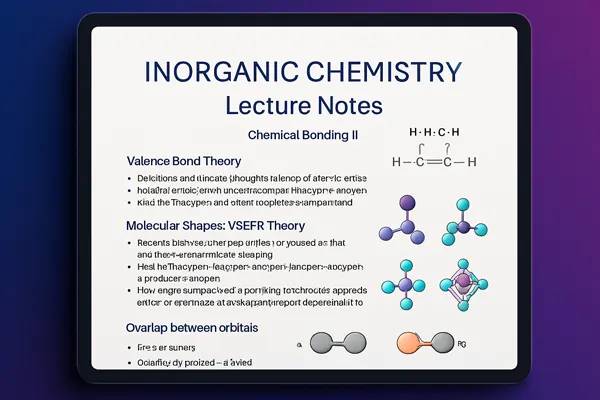
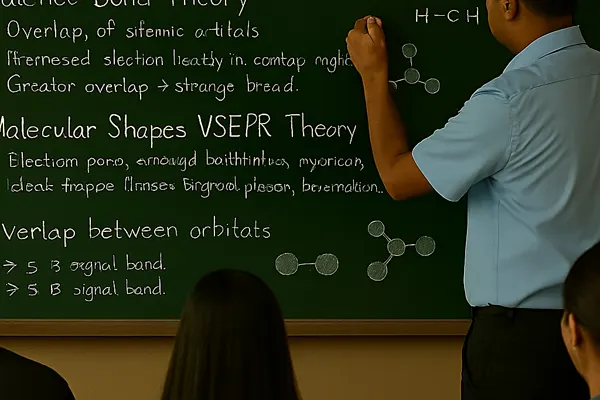
Lecture Notes
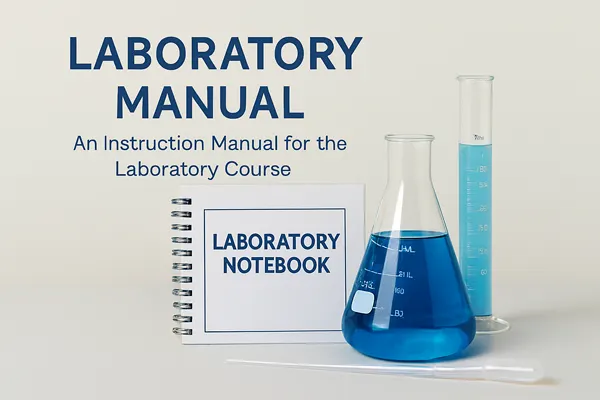
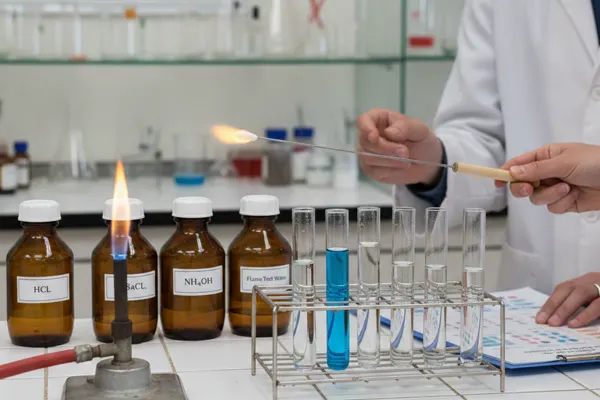
Lab Manuals
Educational Visuals
Resources
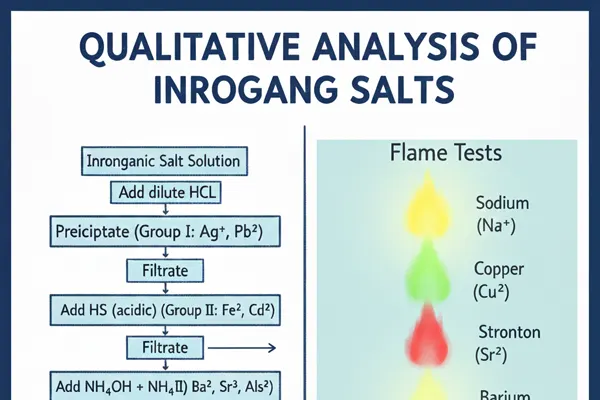
“Chemistry Lab Manual – Qualitative Inorganic Analysis.pdf”
A detailed manual guiding students through synthesis and characterization of transition metal complexes.
Download PDFAdditional resources include problem sets, exam guides, and curated reading lists for advanced chemistry topics.
Curriculum → Skills Mapping
This roadmap consolidates Dr. Manas Kumar Biswas’s teaching contributions in inorganic chemistry across semesters. It highlights how each unit not only builds subject knowledge but also develops practical laboratory and analytical skills, guiding students from foundational atomic theory to advanced organometallic synthesis.
| Semester | Inorganic Curriculum Focus | Skills Developed |
|---|---|---|
| Semester I | Extra nuclear structure of atoms & Periodicity DSCC‑1 Practical (Titrations) |
Atomic theory mastery, precision in volumetric analysis, redox analysis |
| Semester II | DSCC‑2 Practical (Qualitative semimicro analysis) | Systematic qualitative analysis, problem‑solving in inorganic labs, observational skills |
| Semester IV | Inorganic Chemistry I (Chemical Bonding II) Inorganic Chemistry II (Coordination Chemistry) DSCC‑5 Practical (Complexometric titration) DSCC‑8 Practical (Estimation of metal ions) |
Advanced bonding theory, coordination complex analysis, quantitative metal ion analysis |
| Semester V | Inorganic Chemistry III (s/p/d/f block elements, Nuclear model, Radiotracers) DSCC‑10 Practical (Industrial analysis) |
Elemental chemistry expertise, nuclear chemistry applications, applied inorganic analysis |
| Semester VI | Inorganic Chemistry IV (Organometallic Chemistry I) DSCC‑15 Practical (Preparation of complexes) |
Organometallic synthesis, catalysis understanding, synthetic laboratory skills |